The real reasons behind the collapse of an under-construction high-rise building in Bangkok, Thailand, during the Myanmar earthquake can only be understood after a detailed investigation. In this article, I’ll focus on some of the possible reasons based on the social media video evidence. This article is purely for educational purposes and doesn’t necessarily representContinue reading “Reasons Behind Bangkok High-Rise Collapse During Earthquake”
Category Archives: Uncategorized
Codes and Guidelines for Performance-Based Seismic Design – Part 1: Introduction
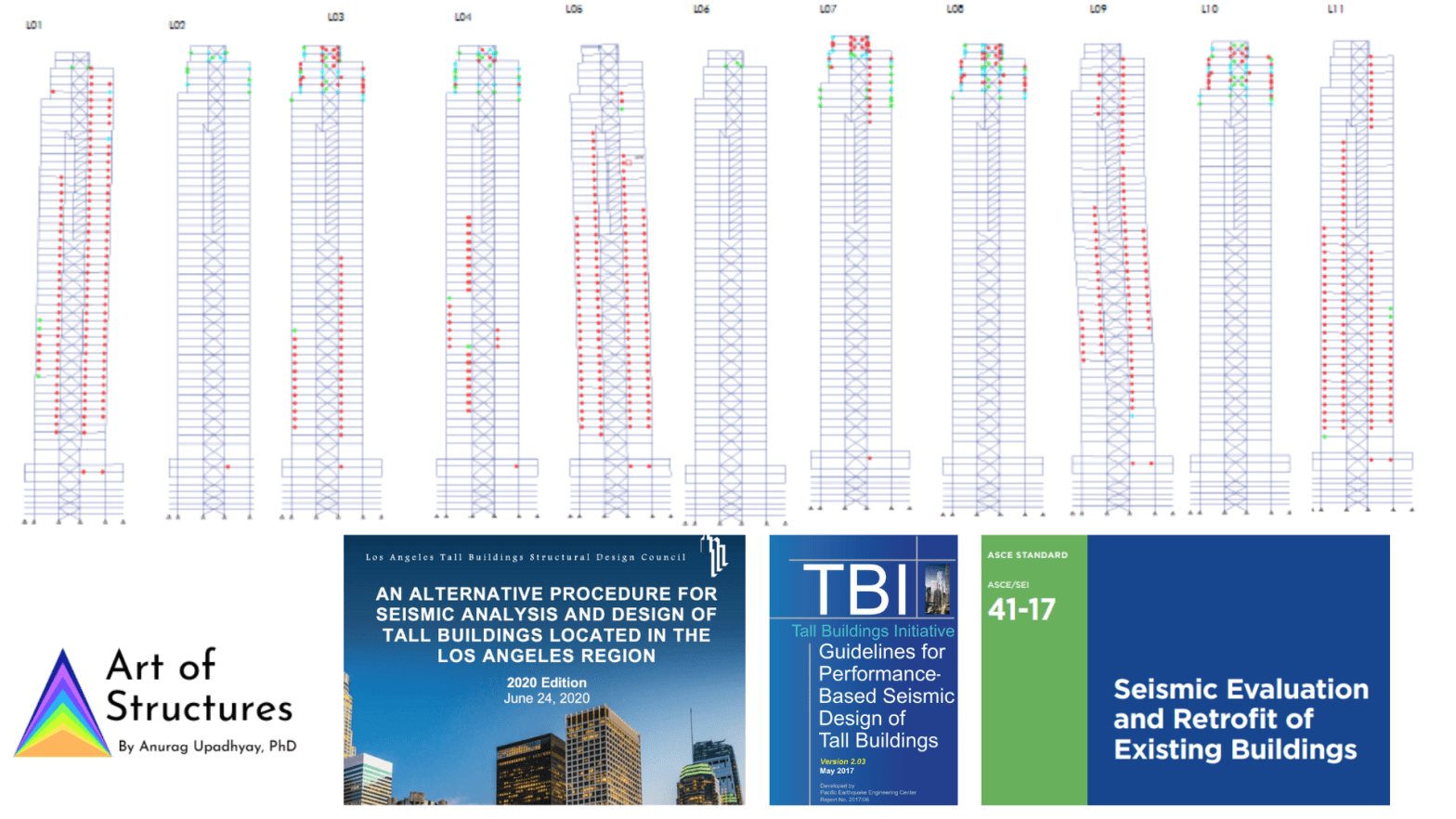
In a previous edition I mentioned that the limitations in the code-based structural design approach led to the innovation of the performance-based seismic design (PBSD) procedure. This, along with advancement in computation power, paved a way for engineers to utilize nonlinear time-history analysis to assess (nearly) true structural behavior. However, this required advanced knowledge ofContinue reading “Codes and Guidelines for Performance-Based Seismic Design – Part 1: Introduction”
Why is nonlinear structural analysis time consuming?
I developed 65 nonlinear analysis models in 2024 for various projects at Tipping. These projects were a mix of new design and seismic retrofit. After seeing my LinkedIn post, many engineers reached out to me wondering how I could do it despite nonlinear analysis being a time-consuming process. Nonlinear structural analysis is the basis ofContinue reading “Why is nonlinear structural analysis time consuming?”
Why more structural engineers should learn nonlinear analysis.
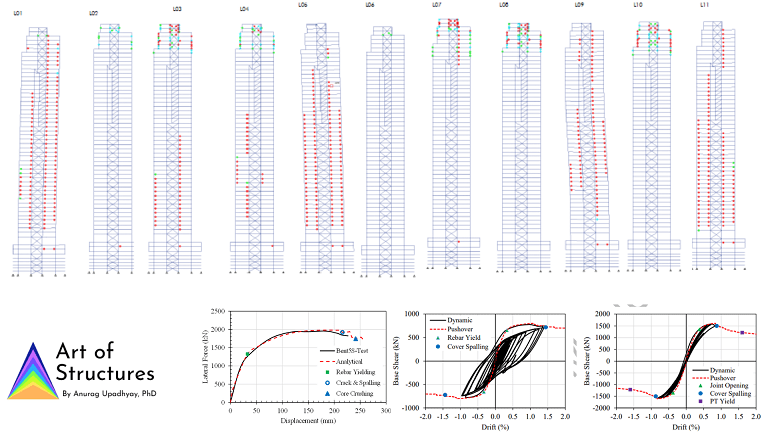
Challenging existing guidelines has always been the catalyst for innovation, in any industry. Structural engineering is also not untouched by this magic. The evolution of buildings in modern times has seen a large shift from brick and stone masonry in the early 19th century to the marvels we see today designed with reinforced concrete andContinue reading “Why more structural engineers should learn nonlinear analysis.”
 Art of Structures